
7 Untold Reasons Why 90% of Startups Fail Before They Begin
Every year, thousands of founders launch startups with confidence, ambition, and big dreams. Most of them never make it past the starting line.
The uncomfortable truth is this: most startups fail before the business truly begins. Not because founders lack intelligence or passion, but because they skip the unglamorous groundwork that turns ideas into real companies.
You might recognize yourself in some of these mistakes. I have seen them repeat across markets, industries, and continents. If you want to beat the odds, you must understand the reasons why 90% of startups fail before they begin, and what you can still do if failure already knocks on your door.
Let’s break them down.
The 7 Reasons Why Startups Fail Before They Begin
1. They Solve Problems Nobody Actually Cares About
Why this kills startups
You fall in love with your idea. The market does not.
This remains the biggest reason why 90% of startups fail before they begin. Founders often build products based on assumptions, not evidence. They chase interesting problems instead of painful ones. According to CB Insights, lack of market need accounts for 42% of startup failures.
If customers do not feel pain, they will not pay.
How to avoid this
Before you build anything, leave your desk.
- Speak directly to potential users
- Ask about frustrations, not features
- Listen more than you talk
- Look for urgency, not compliments
You want problems people already try to fix with spreadsheets, hacks, or costly workarounds.
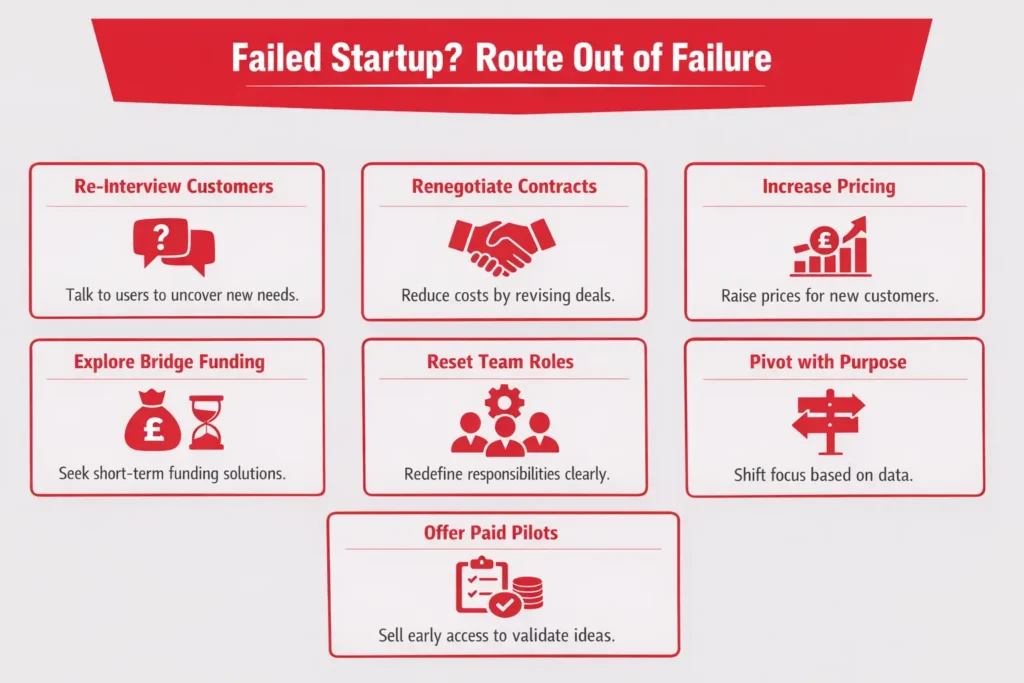
Route out if failure already happens
If users ignore your product:
- Reposition around the strongest pain point
- Pause development
- Re-interview customers
- Strip the product to its core
Real-life scenario
A founder builds an app for organising digital business cards. People praise the design but never use it. After interviews, they discover teams struggle more with tracking follow-ups than storing contacts. The founder pivots and builds a lightweight CRM. Adoption finally grows.
2. They Run Out of Cash Faster Than Expected
Why this kills startups
Cash keeps your startup alive. Once it dries up, everything stops.
Around 29% of startups fail because they run out of money, often due to poor planning. Founders overestimate early revenue and underestimate how long sales take.
Optimism does not pay bills.
Common cash mistakes vs smarter choices
| Costly Mistake | Smarter Choice |
|---|---|
| Hiring too early | Contractors and freelancers |
| Fancy office space | Remote-first setup |
| Too many tools | Essential tools only |
| Long sales assumptions | Conservative forecasts |
How to avoid this
- Track cash weekly
- Plan for a 12 to 18 month runway
- Cut costs that do not drive growth
- Delay hiring until traction appears
Route out if failure already happens
If cash runs low:
- Renegotiate contracts
- Reduce burn immediately
- Explore bridge funding
- Offer paid pilots or pre-sales
Survival buys time. Time creates options.
3. They Build a Product Without a Real Business Model
Why this kills startups
A product without profit logic turns into a hobby.
You can attract users and still fail if your costs exceed what customers pay. Many founders avoid pricing conversations because they feel uncomfortable. That hesitation quietly destroys businesses.
Business model red flags
| Metric | Healthy | Dangerous |
|---|---|---|
| Customer acquisition cost | Low and predictable | Rising fast |
| Lifetime value | Three times CAC | Below CAC |
| Pricing | Clear and tested | Constant changes |
| Monetisation | Planned early | Delayed |
How to avoid this
- Define pricing early
- Understand unit economics
- Test willingness to pay
- Keep the model simple
Route out if failure already happens
If revenue disappoints:
- Increase prices for new users
- Improve retention
- Remove unprofitable features
- Add upsells or subscriptions
You do not need more users. You need better economics.
4. The Founding Team Breaks Before the Product Does
Why this kills startups
Teams destroy startups more often than markets do.
Harvard research shows 65% of high-potential startups collapse due to co-founder conflict. Skill gaps, unclear roles, and ego clashes poison execution.
Balanced team vs risky team
| Area | Strong Team | Weak Team |
|---|---|---|
| Product | Covered | Ignored |
| Sales and marketing | Owned | Avoided |
| Operations | Clear owner | Assumed |
| Decisions | Defined | Constant debate |
How to avoid this
- Define roles early
- Document equity clearly
- Discuss worst-case scenarios
- Align on values, not just skills
Route out if failure already happens
If conflict slows progress:
- Reset responsibilities
- Bring in advisors
- Separate professionally if needed
- Protect the business over pride
Real-life scenario
Two technical co-founders build a strong product but ignore sales. Arguments rise when money runs out. One leaves. The remaining founder hires a commercial lead and finally gains traction.
5. They Underestimate or Ignore the Competition
Why this kills startups
Founders who claim they have no competition signal danger.
If nobody competes, the market may not exist. More often, the real competitor is the current way customers solve the problem.
How to avoid this
- Map direct and indirect competitors
- Study pricing and positioning
- Identify gaps they ignore
- Build a clear advantage
Route out if failure already happens
If competitors outperform you:
- Narrow your niche
- Improve simplicity or speed
- Focus on underserved users
- Strengthen partnerships
Execution beats ideas every time.
6. They Treat Marketing as an Afterthought
Why this kills startups
A great product without visibility stays invisible.
About 14% of startups fail due to poor marketing. Many founders believe quality alone attracts users. It does not.
Weak marketing vs effective marketing
| Weak Approach | Effective Approach |
|---|---|
| Everyone is our user | Clear ideal customer |
| Random channels | Tested channels |
| No metrics | Data-led tracking |
| Hope-driven growth | Measured experiments |
How to avoid this
- Define your ideal customer
- Choose one or two channels
- Track conversions and costs
- Optimise quickly
Route out if failure already happens
If growth stalls:
- Refocus messaging
- Improve onboarding
- Test low-cost channels
- Double down on what converts
Read also: The Impact of Generative AI on Businesses
7. They Ignore Data and Customer Feedback
Why this kills startups
Founders who ignore evidence build fantasy businesses.
Markets respond to behaviour, not beliefs.
How to avoid this
- Track user actions
- Study drop-off points
- Invite brutal feedback
- Treat your idea as a test
Route out if failure already happens
If traction declines:
- Analyse usage data
- Identify real value
- Pivot with purpose
- Update your roadmap
Real-life scenario
Slack started as a gaming company. The team noticed users loved their internal chat tool more than the game. They pivoted and built a global platform.
Frequently Asked Questions (FAQs)
Final Thoughts
If you want to beat the statistics, you must face them honestly.
The reasons why 90% of startups fail before they begin rarely involve luck. They involve ignored signals, delayed decisions, and avoided truths.
You do not need a perfect idea. You need:
- Real problems
- Disciplined spending
- Clear economics
- Aligned teams
- Measured marketing
- Data-driven decisions
Failure does not end startups. Ignoring reality does.