
Today, we no longer depend on the traditional method of reaching, selling, advertising and engaging consumers with television, print, or radio. Rather, companies and small businesses now use online platforms like Search engines, Social media, email etc. to target specific audiences, advertise, engage, sell and measure campaign performance.
So if you are considering building a career in Digital Marketing or want to simply understand how marketing on the internet works, this article will help you understand the fundamentals of digital marketing.
What Is Digital Marketing?
Digital marketing is the art that describe all form of internet marketing. Search engine, Social media, Email and websites to reach and connect with current and prospective customers. Put it simple, Digital marketing is the process of marketing products or services and reaching consumers anywhere using digital channels.
Evolution of Digital Marketing
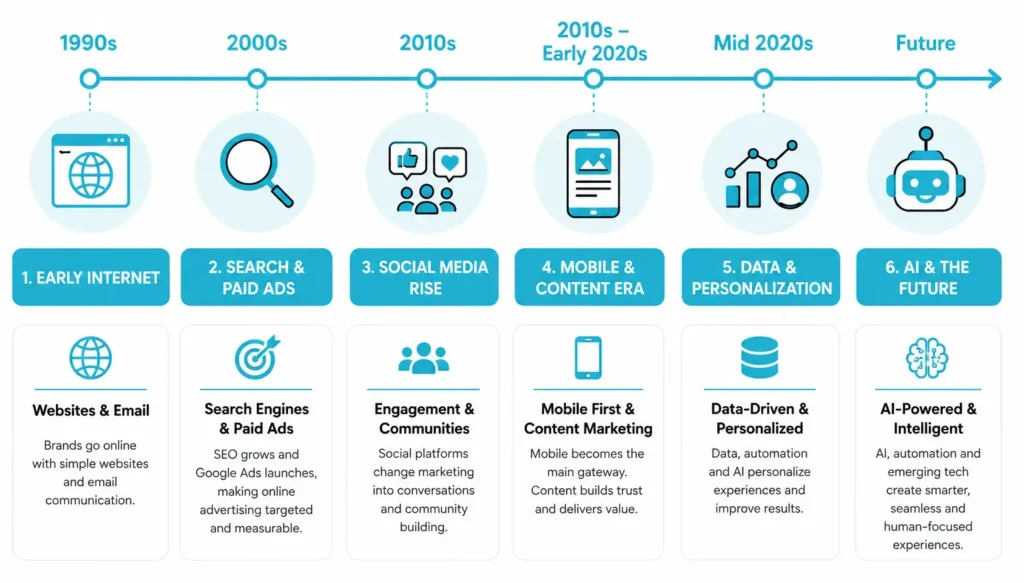
Digital marketing has come a long way from the days of basic websites and simple online advertisements. Over the years, new technologies, changing consumer habits, and the growth of the internet have continuously reshaped how businesses reach and engage their audiences. What started as a way to establish an online presence has evolved into a sophisticated marketing ecosystem powered by search engines, social media, mobile devices, data analytics, automation, and artificial intelligence.
1990s – Early Internet
In the 1990s, Businesses began establishing their online presence through simple websites and email. At the time, digital marketing was still in its infancy and focusing mainly on providing information rather than engaging customers.
2000s – Search & Paid Ads
But in the 2000s, Search engines became the primary way people discovered businesses online. SEO and pay-per-click (PPC) advertising transformed marketing by making it more targeted, measurable, and results-driven.
2010s – Social Media Rise
By 2010, Social media platforms changed digital marketing from a one-way communication into two-way engagement. This time, many Brands moved focused to building communities, creating valuable content, and interacting with customers in real time.
2010s – Early 2020s – Mobile & Content Era
And between 2010 and Early 2020, Smartphones made mobile the primary way people accessed the internet. Businesses adopted mobile-first strategies while investing heavily in content marketing to educate, attract, and convert audiences. These marked a major shift in the digital marketing landscape.
Mid-2020s – Data & Personalisation
At this point, marketing became more data-driven, helping brands reach the right audience with the right message at the right time. These was made possible with advances in analytics, automation, and customer data which enabled businesses to deliver highly personalized experiences.
Future – AI & Beyond
Today, Artificial intelligence is shaping the future of digital marketing through automation, predictive analytics, and personalized customer experiences. As technologies like AI, AR, and VR continue to evolve, marketers will focus on creating smarter, more immersive, and more ethical digital experiences.
What are the Types of Digital Marketing?
Digital marketing encompasses 13 key branches: Search Engine Optimization (SEO), Content Marketing, Social Media Marketing (SMM), Email Marketing, Search Engine Marketing (SEM), Pay-Per-Click (PPC) Advertising, Video Marketing, Mobile Marketing, Influencer Marketing, Affiliate Marketing, E-commerce Marketing, Online Reputation Management (ORM), and Marketing Automation. To help you determine which digital marketing strategies You’d love to either dive into or implement for your business, below is a glance:
Search Engine Optimization (SEO)
Search Engine Optimization (SEO) is the process of improving a website so it ranks higher in organic (non‑paid) search results on Google and other search engines. It covers keyword research, on‑page optimization, technical health (speed, crawlability, structured data), and link authority to grow targeted traffic over time.
Content Marketing
Content marketing focuses on creating and distributing valuable, relevant content (blog posts, guides, ebooks, infographics, podcasts, etc.) to attract and nurture a defined audience. The goal is to build trust, demonstrate expertise, and move people toward profitable actions without overtly “hard selling.”
Social Media Marketing (SMM)
Social media marketing Is the use of platforms like Instagram, TikTok, Facebook, LinkedIn, X, and others to share content, build community, and drive engagement and traffic. It includes organic posting, community management, and paid social campaigns designed to increase brand awareness, leads, and sales.
Email Marketing
Email marketing is the act of sending targeted messages to a list of subscribers or customers through email. It typical uses include newsletters, product updates, nurturing sequences, and promotional campaigns, all of these is aimed at maintaining relationships, driving repeat visits, and increasing customer lifetime value.
Search Engine Marketing (SEM)
SEM is a broader term for using search engines to gain visibility, usually through paid placements. In practice, it often means running paid search ads (e.g., Google Ads) so your site appears for specific keywords immediately, complementing longer‑term organic SEO efforts.
Pay‑Per‑Click (PPC) Advertising
PPC is a paid advertising model where you pay each time someone clicks your ad rather than for impressions. It includes search ads, display ads, shopping ads, and some social ads, with tight control over targeting, budgets, and bidding to drive measurable, performance‑based results.
Video Marketing
Video marketing is the use of video content (short‑form clips, explainers, product demos, webinars, live streams) to communicate your brand message, show products in action, and educate or entertain your audience. It runs across platforms like YouTube, TikTok, Instagram Reels, and embedded site videos to boost engagement and conversions.
Mobile Marketing
Mobile marketing targets users on smartphones and tablets through channels like mobile‑friendly websites, apps, push notifications, SMS, in‑app ads, and location‑based campaigns. The focus is on delivering fast, frictionless experiences that fit small screens and on‑the‑go behavior.
Influencer Marketing
Influencer marketing partners brands with individuals who have established audiences and credibility in a niche. These influencers create content that features or recommends a product or service, leveraging their trust and reach to drive awareness, engagement, and sales.
Affiliate Marketing
Affiliate marketing is a performance‑based model where partners (affiliates) promote your products or services using unique tracking links and earn a commission for each sale or lead they generate. It extends your reach through blogs, review sites, social channels, and email lists without upfront ad spend.
E‑commerce Marketing
E‑commerce marketing covers all digital tactics used to drive traffic and sales for online stores. It blends SEO, paid ads, email, social, content, and conversion rate optimization to attract visitors, guide them through product discovery, and maximize cart completion and repeat purchases.
Online Reputation Management (ORM)
ORM focuses on monitoring, influencing, and improving how a brand or individual is perceived online. It includes managing reviews, responding to feedback, optimizing branded search results, and publishing positive content to ensure the most visible information reflects the desired reputation.
Marketing Automation
Marketing automation uses software to streamline and automate repetitive marketing tasks and workflows across channels. Common examples include automated email sequences, lead scoring, behavioral triggers, and cross‑channel campaigns that deliver personalized messages at scale based on user actions.
What are the Benefits of Digital Marketing?
Digital marketing offers businesses of every size an effective way to reach customers, build relationships, and achieve measurable growth. Unlike traditional marketing, it allows you to target the right audience, monitor campaign performance in real time, and optimise your efforts for better results.
1. Global Reach
Digital marketing enables businesses to reach customers anywhere in the world through websites, search engines, social media, and online advertising. Even small businesses can compete in international markets without opening physical locations.
2. Cost-Effective Marketing
Compared to traditional advertising such as television, radio, or print media, digital marketing often delivers better results at a lower cost. Businesses can start with small budgets and scale campaigns as they grow.
3. Targeted Audience
Digital marketing allows you to target specific groups of people based on factors such as age, location, interests, behaviour, occupation, and purchasing habits. This helps you reach people who are more likely to become customers.
4. Measurable Results
Every digital marketing campaign generates data that can be tracked and analysed. You can monitor website traffic, clicks, conversions, sales, and customer engagement to measure success and improve future campaigns.
5. Higher Return on Investment (ROI)
Because campaigns can be targeted, monitored, and optimised, businesses often achieve a higher return on investment than with many traditional marketing methods.
6. Increased Brand Awareness
A strong online presence across search engines, social media platforms, blogs, and email campaigns helps businesses become more visible and memorable to potential customers.
7. Better Customer Engagement
Digital marketing creates opportunities for two-way communication through comments, messages, emails, live chats, and social media interactions. This strengthens relationships and builds customer trust.
8. Personalised Marketing
Businesses can deliver personalised content, product recommendations, and promotional offers based on customer preferences and behaviour, creating a more relevant experience.
9. Faster Results
Many digital marketing strategies, especially paid advertising and email marketing, can produce results within hours or days, making them ideal for promoting products, services, or events quickly.
10. Improved Customer Experience
Businesses can use customer data to create user-friendly websites, relevant content, personalised recommendations, and responsive support, leading to higher customer satisfaction.
11. Better Conversion Rates
By using landing pages, persuasive content, targeted advertising, and conversion rate optimisation techniques, digital marketing helps convert more visitors into leads and paying customers.
12. Competitive Advantage
Businesses that invest in digital marketing can compete effectively with larger organisations by improving their online visibility, attracting qualified leads, and responding quickly to market trends.
13. Real-Time Optimisation
Campaign performance can be monitored continuously. If a campaign is not performing well, marketers can adjust budgets, keywords, audiences, or content immediately to improve results.
14. Supports Business Growth
Digital marketing helps businesses generate leads, increase sales, build customer loyalty, and expand into new markets, making it a key driver of long-term growth.
15. 24/7 Online Presence
Your website, online store, and digital content remain accessible around the clock, allowing potential customers to discover your business, learn about your products or services, and make purchases at any time.
16. Builds Customer Loyalty
Regular communication through email newsletters, social media, personalised offers, and valuable content helps businesses retain existing customers and encourage repeat purchases.
17. Data-Driven Decision Making
Digital marketing provides valuable insights into customer behaviour and campaign performance. Businesses can use this data to make informed decisions, refine strategies, and allocate marketing budgets more effectively.
18. Scalability
Digital marketing campaigns can grow alongside your business. Whether you’re targeting a local audience or expanding internationally, strategies and budgets can be adjusted to meet changing business goals.
19. Enhanced Credibility and Trust
Maintaining a professional website, publishing valuable content, collecting customer reviews, and engaging actively on social media all help establish authority and build trust with your audience.
20. Greater Flexibility
Digital marketing offers a wide range of channels and tactics, allowing businesses to experiment with different approaches, test new ideas, and adapt quickly to changes in customer behaviour or market conditions.
