

Every website owner loves to get as many eyes as possible on their sites without paying for advertising. But if you publish a page on a topic that no one is searching for, that article won’t receive any traffic from Google or other search engines – No matter how hard you try. This is why understanding how to conduct an effective keyword Research for SEO is important.
Keyword research is one of the most important parts of SEO. If you want your content to show up in search results, you need to know what your audience is searching for, how they search, and what kind of content they expect to find.
This guide explains how to do keyword research for SEO step by step, even if you are a beginner. You will learn what keywords are, why keyword research matters, how to find the right keywords, and how to use them effectively on your website.
At the heart of SEO are search keywords
What are keywords?
Keywords are the words and phrases people type into search engines when they are looking for information, products, or services. For example, if someone searches for “best tennis classes near me” or “handmade leather wrist watch,” those are keywords.
Understanding and targeting the right keywords for your website ensures it appears in search results when people look for content, products, or services like yours.
For example, a beginner blogger may target keywords like “SEO for Beginners” or “How to write a Blog Post“. A photographer may focus on “family photography packages” or “wedding photographer near me.”
What is keyword research?
Keyword research is the practice of examining what words and phrases (keywords) people type into search engines to find information, product and services. This process helps you know the terminology your audience uses when they search for things related to your business, to understand your audience’s language, their interests, and the topics they care about most and how many people – approximately, are searching those words and phrases each month.
That information helps you decide which keywords are worth targeting in your content strategy.
Benefits of keyword research
- Keyword research helps you understand what your audience is actually searching for, the language they use, and the intent behind those searches. Which makes it easier to create content that feels relevant to readers and is more likely to rank in search results.
- By checking search volume, keyword difficulty, and topical relevance, you can focus your efforts on topics that have a genuine chance of bringing in traffic and avoid wasting time on content that has no search demand or unrealistic ranking potential.
- Another major benefit is that keyword research improves your content strategy. Instead of publishing disconnected pages, you can build topic clusters around related keywords, making it easier to build authority in your niche and help search engines understand what your site is about.
- Keyword research can also improve conversions. When you target keywords that match user intent, you attract visitors who are more likely to stay on the page, explore your site, and take action because the content answers what they were already looking for.
- It also gives you insight into market trends and audience behavior. Over time, this helps you spot new content ideas, stay ahead of trends, and keep your website relevant.
- In short, keyword research helps you place your SEO efforts where they matter most. It helps you create content that is useful, discoverable, and more likely to perform well in search results.
Factors to consider when researching keywords
When choosing keywords to target for your website, it is important to look keywords that fit your business, match search intent, and give you a realistic chance of ranking well.
- Relevance should always come first. A keyword may have high search volume, but if it does not connect closely to your product, service, or content, it is unlikely to bring in the right audience.
- Search volume tells you how many people are searching for a keyword each month. While high-volume keywords can bring more traffic, they are often more competitive, so they are not always the smartest choice for smaller or newer websites.
- Keyword difficulty helps you understand how hard it may be to rank for a term. If the first page is dominated by major, established websites, it may be better to target a less competitive keyword instead.
- Authority also matters. Search engines tend to reward websites that have proven expertise in a topic, so it makes sense to focus on keywords you can credibly cover and compete for.
- Trends can create sudden opportunities, but they should be approached carefully. Some keywords rise because of seasonal demand or current events, but those gains may not last, so it is better to use trends strategically rather than chase them blindly.
- Localization is important if your audience is tied to a specific place. In that case, location-based keywords can help you reach the right people, especially since even broad searches may produce local results.
Good keyword research is about balance. You want keywords that are relevant, achievable, and valuable to your audience, not just popular on paper.
How to do keyword research
Step 1: Start with what’s on your mind
The best way to begin keyword research is to think like your audience. Starts from putting yourself in the shoes of your customers. Ask yourself what word or phrase they would use to find the solution to a problems
Start by brainstorming keywords on your own that describe your business, products, services, the problem you want to solve, information you want to pass and generally, the content topic you want to write about. You have to ask yourself the following questions:
- What would I search to find my website or one like mine?
- What problems do my content, products, or services solve?
- What words or phrases do customers use when they talk about my business, product or services?
- What terms would they use to find the information or content I want to write about?
- What words or phrases are associated or related to my topic?
It’s a good bet that your own search behavior is pretty typical. You and your customers probably find information online in similar ways. But If you’re unsure, ask friends, family, or customers what they’d search for. You might uncover valuable keywords you hadn’t thought of.
Step 2: Use keyword research tools
Keyword tools can help you expand your ideas and discover new opportunities, but they should not be your first step. Start with your own brainstorming, then use tools to validate and refine your list. Then head over to your browser.
Google search itself can offer helpful keyword suggestions. You can use autocomplete, related questions, and related searches to find phrases people are already looking for.
Google Autocomplete: Google tries to suggest related search queries with the intention that their suggestions or autocomplete list would be what you are looking for. This can be a really nice source of inspiration and guide around your choice keywords.
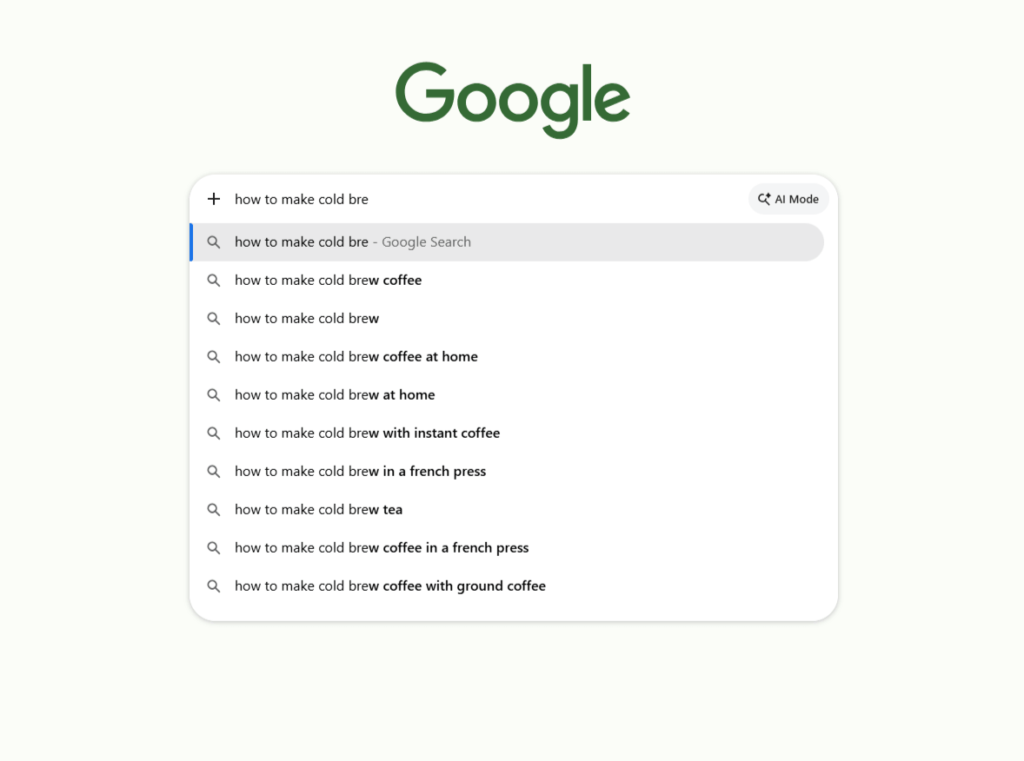
Start by typing your seed keyword into Google search and add different letters to see the suggestions. These suggestions can reveal how real users phrase their queries and can give you new keyword ideas
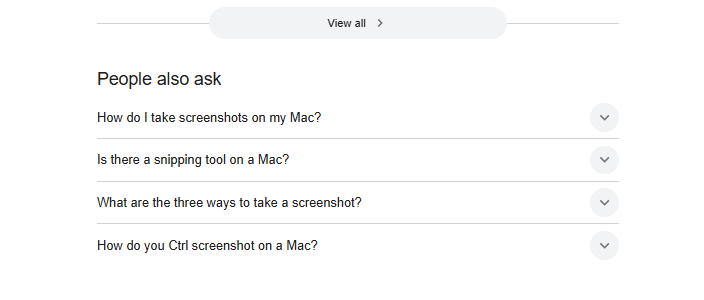
People also ask: is another useful feature to help your keyword search. It appears mostly for question queries. It shows questions related to your search term and can help you discover topics your audience wants answer to.
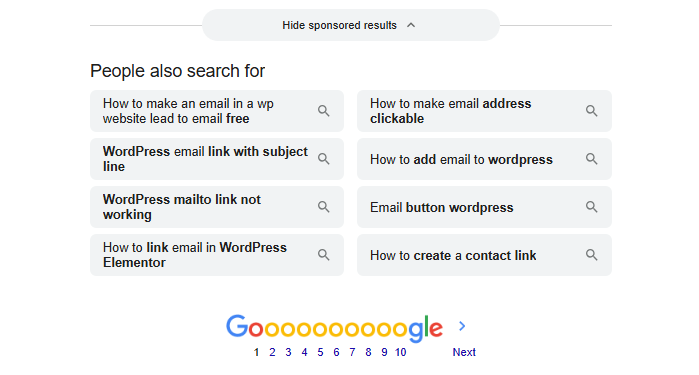
People also search for: Google has also provided a “People also search for” snippet to help your keyword search. It suggest questions and other related search queries They may be good source of inspiration for you.
Of course, there are other helpful tools and places you can source for keyword inspiration like Google keyword tool planner, Answer the public, Google Search console, Ubersuggest, Niche forums, Reddit Twitter threads, Quora questions, Facebook groups, Content curation platforms, etc.
Pro tip: Other search engine like Bing, Yahoo, or DuckDuckGo, offer their own suggestions and related terms just as Google, you can try .
Step 3: Separate Short-Tail and Long-Tail Keywords
Once you have a list of keyword ideas, carefully organize them by length and specificity.
- Short Tail Keywords: Short-tail keywords consist of one to two broad words with high search volume
- Long Tail Keywords: long-tail keywords use three or more specific words with lower search volume and clearer intent
Short-Tail Keywords
- Length: One or two words maximum.
- Search Volume: Very high monthly searches.
- Competition: Extremely high and hard to rank for.
- User Intent: Broad and general (e.g., “shoes” or “laptops”).
Long-Tail Keywords
- Length: Three or more words.
- Search Volume: Lower monthly search numbers.
- Competition: Low competition, making them easier to rank for.
- User Intent: Highly specific and purchase-ready (e.g., “best budget gaming laptops under $800”).
For beginners, long-tail keywords are often easier to rank for because they are more specific and better aligned with user intent.
4. Analyzing your Keywords
Now that you have dozens of keyword ideas, your next task is to select the ones that will bring the most value to you not just to optimize for all the keywords you have gathered. Your goal is not to optimise for every keyword you have collected, but to select the most suitable keywords for your content.
Every piece of content should have one primary or focus keyword. A focus keyword is the search term that best represents the topic of your page and offers the greatest SEO potential.
When analyzing keywords, focus on four main factors: Search Volume(popularity of the keyword), Competition(keyword difficulty), Relevance(Search intent) and Seasonality of the keyword(Timing)
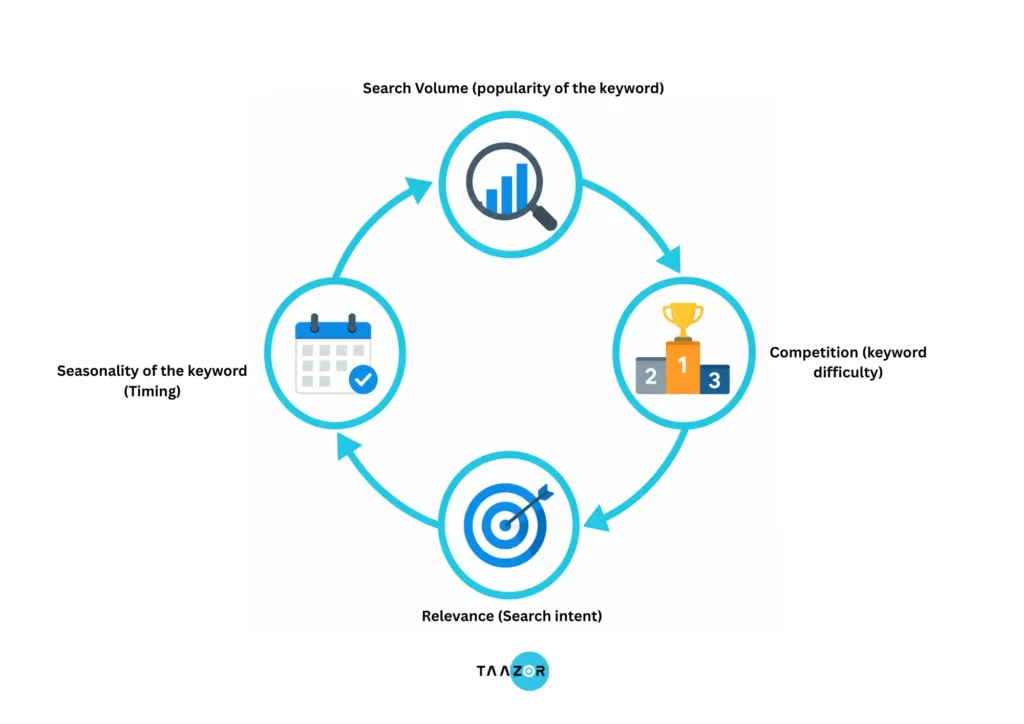
1. Search Volume (Popularity of the keyword)
The Search volume of a keyword shows how many people search for a given phrase or keyword. It is usually calculated as average monthly searches.
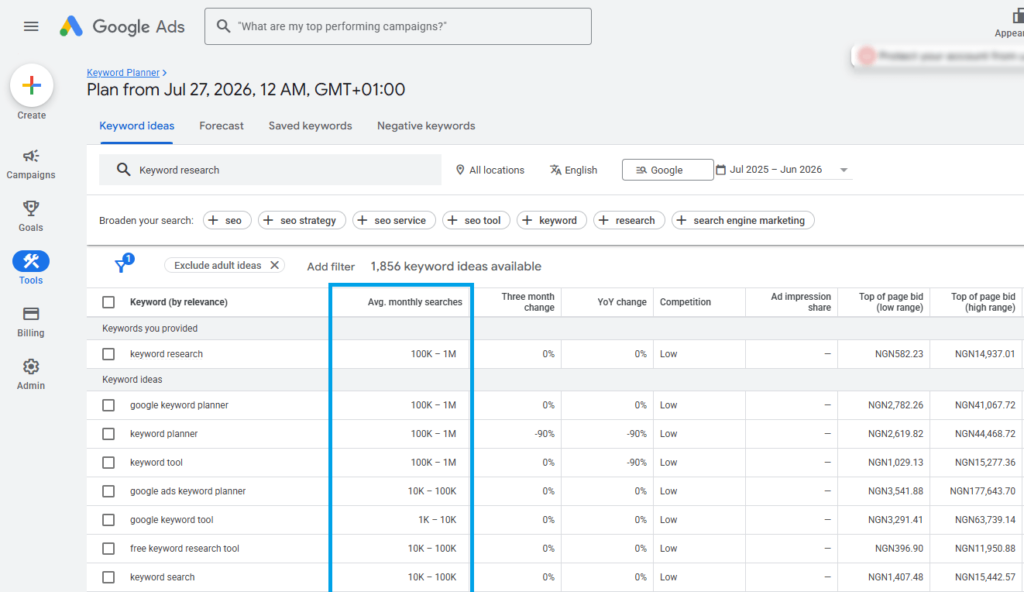
Keep in mind that: Your content might likely rank for many other keywords. Hence you dont want to be stocked to keyword search volume. This keyword search volume are meant to guide you (serve as clue).
2. Competition (Keyword Difficulty)
Keyword difficulty estimates how hard it is to rank for a particular keyword in search engine results. The higher the keyword difficulty, the more competitive the keyword becomes. The difficulty of a keyword is many times judged base on the authority of the website wish are ranking with it already, This metric is often influenced by factors such as: the number of quality backlinks a website has, Domain Authority, Page Authority, Citation Flow and Trust Flow
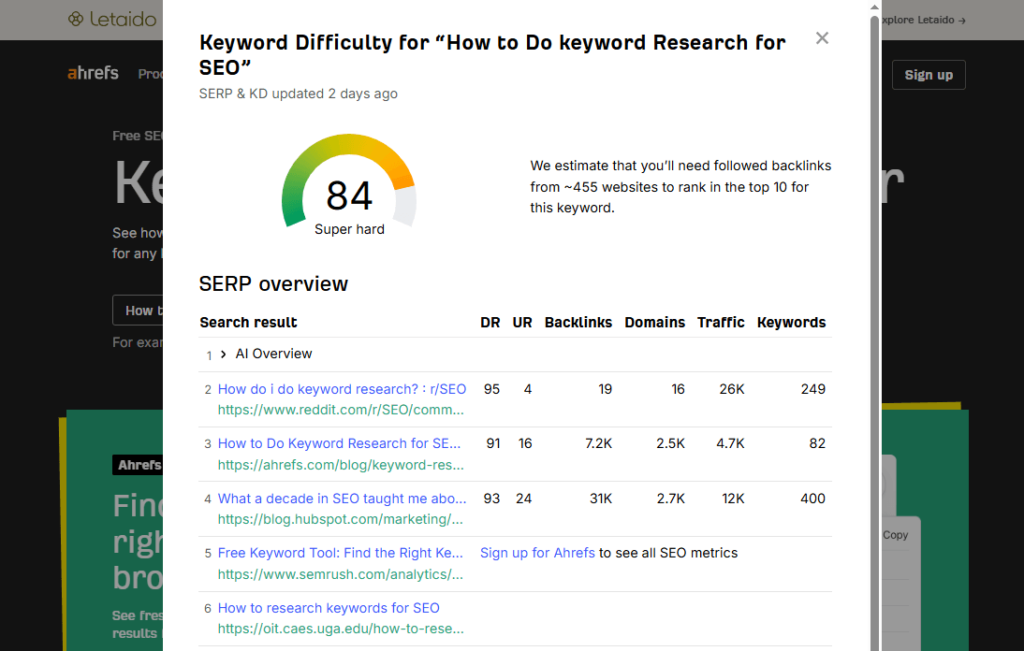
However, never choose or reject a keyword based solely on its difficulty score. Use the metric as a guideline (a clue) Because chances are that you can outrank a website with higher authority if your content is better. Therefore, always perform a SERP (Search Engine Results Page) analysis before making your final decision. Review the pages currently ranking on Google to understand the quality, content depth, user experience, and opportunities to create something better.
3. Relevance (search intent)
Every search has a purpose, and every piece of content should satisfy that purpose. This purpose is known as search intent. Understanding search intent helps you choose keywords that match what users actually expect to find when they search. There are four primary types of search intent:
- Informational search intent– the user is searching to learn something or find information. Example of this search is when a user types in: What is SEO?, How to bake a cake, Benefits of digital marketing.
- Navigational search intent– the user is searching for and wants to visit a specific website, brand or page. Examples: Facebook login, YouTube Studio, ChatGPT.
- Commercial search intent– The user is researching products or services before making a purchase decision. Example: Best laptops for students, SEMrush vs Ahrefs, iPhone 17 review.
- Transactional search intent– The user is ready to complete an action such as making a purchase, subscribing, or signing up. Example: Buy running shoes online, Subscribe to Netflix, Download Grammarly Premium.
Sometimes, a keyword may appear relevant to your topic but fail to match the user’s actual intent. That is why you should always search the keyword on Google and examine the first SERP.
If most of the top-ranking pages are blog posts, creating a product page may struggle to rank. Likewise, if the results are mostly product pages, publishing an informational article may not satisfy user intent. Hence matching your content to search intent is one of the most important factors in achieving strong rankings and attracting the right audience.
4. Seasonality (Timing)
Seasonality refers to how the popularity of a keyword changes throughout the year. Some keywords receive consistent search traffic, while others experience predictable spikes during certain months, seasons, holidays, or events. For example:
- Christmas gift ideas peaks towards the end of the year.
- Black Friday deals becomes highly popular in November.
- World Cup tickets sees a surge before and during the tournament.
Your understanding of seasonality helps you publish content before demand reaches its peak, giving search engines enough time to crawl, index, and rank your pages.
Tools such as Google Trends can help you identify seasonal patterns and compare keyword popularity over time.
Note: Do not ignore low search volume simply because it appears small at the moment. A seasonal keyword can generate substantial traffic during its peak period if you publish and optimize your content early enough.
Where to apply keywords on your website copy?
- Page titles: Page titles are one of the most important SEO elements. Search engines use them to understand your page topic, and users often see them first in search results.
- Meta descriptions: Meta descriptions are the short snippets that appear below your page title in search results. Including keywords here can improve relevance and encourage clicks.
- URLs: Including keywords in your page URLs helps both users and search engines understand the content of your pages.
- Headings and Subheadings: Headings help organize your content and make it easier to read. Having your keyword here give search engines more context about your topic.
- Body text: Naturally integrating keywords into your website’s main content improves relevance and searchability. Avoid stuffing them into every paragraph.
- Image alt text: Keywords in image descriptions improve your site’s accessibility and helps search engines understand your images to show it in searches.
- Product descriptions: Keywords describing your product help customers find exactly what they’re looking for in shopping searches.
- Blog posts: Writing articles that address common questions or interests in your field is a great way to target informational keywords, which can lead visitors to explore your site more deeply.
Tools for keyword research
| Tool | Primary Purpose | Free/Paid | Best For |
|---|---|---|---|
| Ahrefs | Advanced keyword and backlink research | Paid | SEO professionals and agencies |
| Google Keyword Planner | Keyword discovery for ads and SEO | Free | Beginners and Google Ads users |
| SEMrush | Complete SEO and competitor research | Free and Paid | Agencies, marketers, and growing brands |
| Ubersuggest | Simple and affordable keyword research | Free and Paid | Small businesses and beginners |
| AnswerThePublic | Content idea generation from search questions | Free and Paid | Bloggers and content creators |
| Moz Keyword Explorer | Keyword prioritization and opportunity analysis | Free and Paid | SEO planning and content strategy |
| KeywordTool.io | Long-tail keyword research | Free and Paid | Long-tail SEO targeting |
| AlsoAsked | Question clustering and topic expansion | Free and Paid | FAQ pages and content planning |
Final Thoughts
Keyword research is the foundation of successful SEO. It helps you understand your audience, choose the right topics, and create content that has a better chance of ranking in search results.
The key is to start with your audience, gather keyword ideas, analyze them carefully, and choose keywords that match both search intent and your website’s goals. When done well, keyword research can improve your visibility, bring in more targeted traffic, and strengthen your overall content strategy.
If you want your SEO content to perform better, keyword research should never be an afterthought. It should be part of the planning process from the beginning.
